Campaigns / Channel-choice worksheet
How to choose the right channel for a golf club campaign
A practical worksheet for comparing existing audiences, active search, discovery and partner referrals against intent, destination readiness, capacity and measurement.
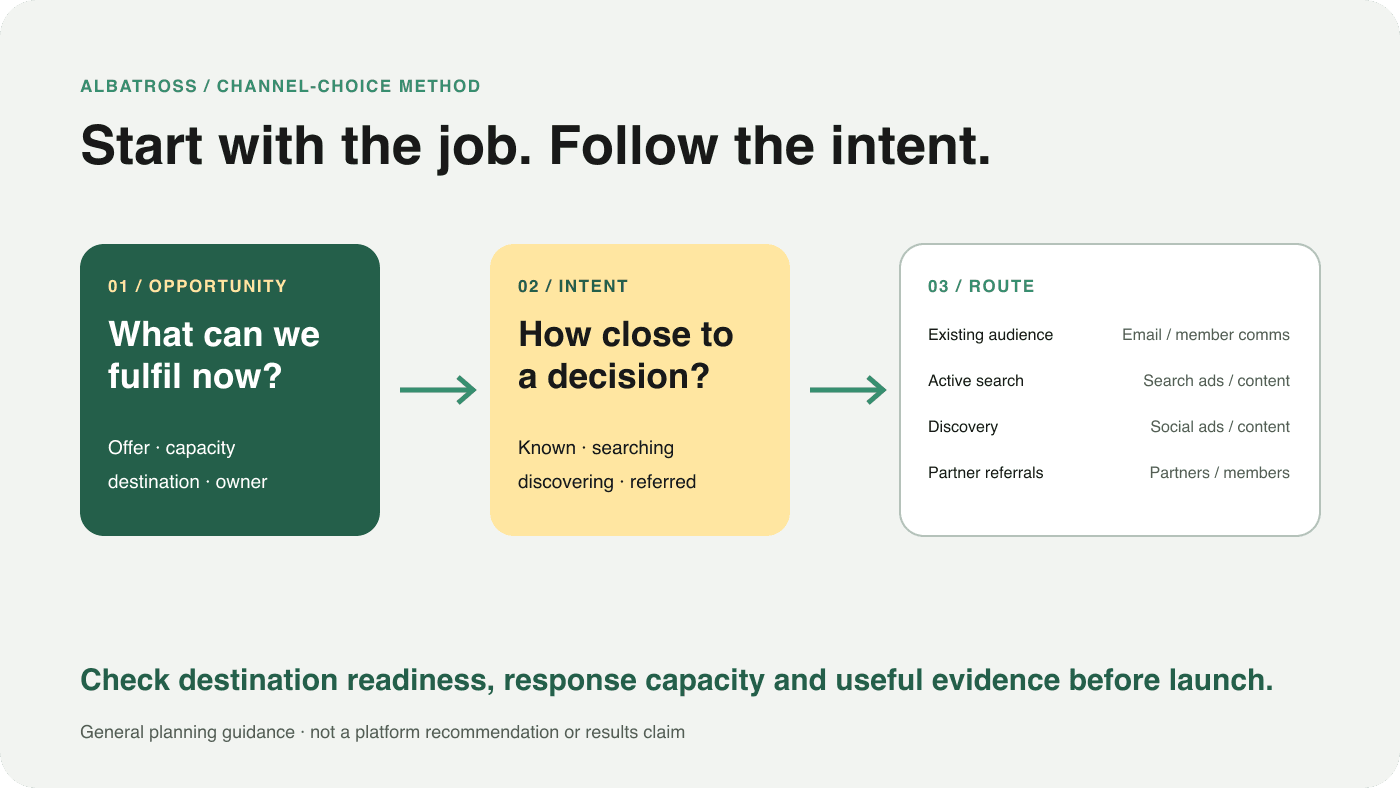
Choose the route after you define the opportunity.
A campaign channel is useful only when it connects a real club opportunity with people whose level of intent suits the message. Begin with what the club has room to grow, the offer it can fulfil and the action it wants someone to take. Then compare the routes available.
Existing-audience communication might use email or member communications. Active search may use Google Ads or useful search content. Discovery may use Facebook, Instagram or organic social content. Partner referrals may come through professional relationships or member introductions. These familiar channels solve different access problems, and none is automatically the right starting point.
Copyable comparison worksheet
Compare intent, destination, capacity and evidence.
Copy the table and replace the guidance with the club's actual information. Strike out a route when its audience, destination or operational capacity is not ready. Channel selection should narrow the plan, not provide a reason to use every available medium.
On a smaller screen, scroll across the table to compare the four routes.
| Route | Audience intent | Destination readiness | Club capacity | Useful measure |
|---|---|---|---|---|
| Existing audience: email and member communications | People already known to the club: members, past visitors, previous organisers or opted-in contacts. | A relevant email, page or direct conversation that acknowledges the existing relationship. | Can the club segment the audience and handle replies, bookings or introductions without sending an irrelevant blanket message? | Delivered messages, useful replies, enquiries and completed next actions from the agreed list and period. |
| Active search: Google Ads and search content | People expressing a current need, such as society golf in an area or a membership category they are considering. | A page that answers that need, explains the offer and gives a clear route to enquire, visit, apply or book. | Is the offer available when people are searching, and can the club respond while the need is active? | Relevant search visits, useful enquiries and completed next actions, reviewed separately from advert-platform activity. |
| Discovery: Facebook, Instagram and organic social content | People who fit the audience but are not currently searching for the club or offer. | A persuasive introduction with enough context to turn attention into informed consideration. | Can the club sustain broader reach and distinguish curiosity from meaningful interest? | Qualified site visits, enquiries and later progression, with the limits of source attribution recorded. |
| Partner referrals: partner and member introductions | People introduced through a relevant professional, organisation, member or local relationship. | A shareable page, pack or named contact that makes the referral easy to understand and continue. | Does the partner know who fits, what can be offered and who at the club receives the introduction? | Introductions received, fit, response and progression, with the referring source recorded by the club. |
The destination has to be ready for that level of intent.
Someone actively searching for a society day needs practical package, date and enquiry information. Someone encountering the club for the first time may need to understand the course, experience and reason to consider it before being asked to enquire. A past visitor may need a concise reason to return rather than the club's full introduction.
Check that the page, form, booking route or named contact continues the promise made in the message. Confirm what is available, who receives the response and which source information the club can inspect. If the destination cannot answer the likely question, fix that gap before buying more attention.
Clearly fictional worked decision
Hawthorn Mere chooses active search for weekday societies.
Hawthorn Mere Golf Club is fictional. This example contains no client evidence, prices, media results or delivery promise.
Opportunity and capacity
The club has agreed weekday society dates in late spring. The golf team can confirm availability and respond to suitable organisers. Weekend packages are outside the brief.
Intent and destination
The priority is organisers already comparing venues in the region. The club prepares a society page covering group fit, package choices, practical requirements and a short enquiry form.
Route choice
Active search is the first route because it matches the immediate comparison need. A partner-referral pack may follow once the page is proven useful. Broad discovery is held until the club can justify the extra reach and follow-up load.
Evidence boundary
The club records relevant visits, enquiries, response ownership and confirmed next steps for the agreed period. Those measures do not by themselves prove that one channel caused a later booking.
Record the decision before platform setup begins.
- Name the opportunity, available capacity and intended next action.
- State the audience's likely intent and why the chosen route fits it.
- Link the approved destination and name the person who keeps it current.
- Name the response owner and the evidence the club can read back.
- Record which routes were held back and what would make them ready.
This worksheet stops at channel choice. Platform setup and campaign measurement need their own agreed plan. For a practical review framework, read how to tell whether golf club Facebook ads are working.
Campaigns by Albatross
Give the campaign a clear job before choosing its channel.
Albatross brings the offer, creative, audience and next step together around the opportunity your club wants to grow.